For adhesives, strong bonding strength alone is not sufficient. Long‑term adhesive performance is equally critical. Even high‑performance adhesives may fail over time: bonded parts may peel off, or adhesive force may gradually decline. Therefore, proper measures must be adopted to maintain durable adhesion.
Research and practical show that adhesives bond substrates relying on intermolecular attraction. The Interfacial adhesion is a comprehensive effect of secondary forces (physical force, electrostatic force), primary valence force (chemical force), and mechanical force. Among them, secondary forces serve as the main contributor to bonding force.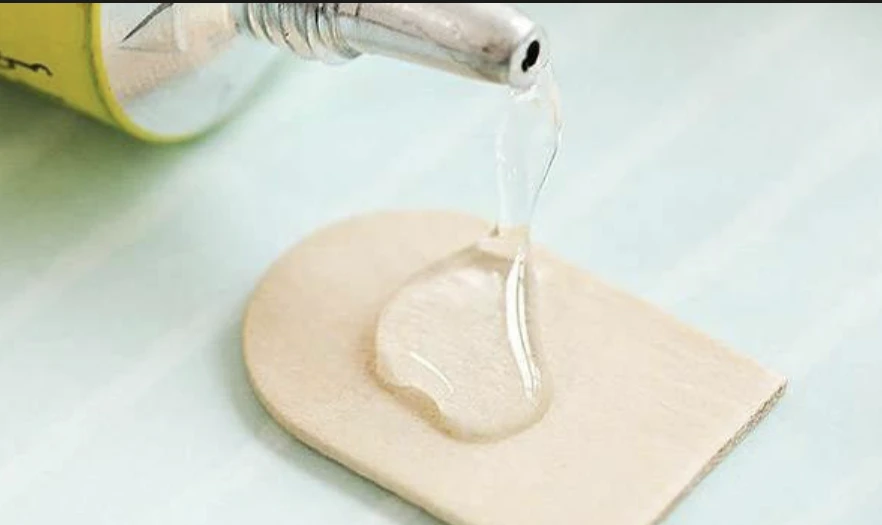
Two Stages of Bonding Force Formation
The formation of bonding force can be divided into two interrelated stages:
Stage 1: Driven by Brownian motion, fluid adhesive molecules diffuse toward the surface of substrates and get gradually close to them. Good fluidity (lower viscosity) of adhesive liquid and applied curing pressure facilitate intermolecular contact and approaching.
Stage 2: Generation of intermolecular adsorption. When the distance between adhesive molecules and substrate surface molecules is reduced to a certain range, secondary forces take effect and increase as the intermolecular distance shrinks.
These two stages cannot be completely separated and keep proceeding before the adhesive is fully cured. Accordingly, sufficient contact between adhesive and substrate surface and shortened intermolecular distance are the keys to achieving reliable bonding force.
For the same type of adhesive, multiple conditions help achieve optimal bonding performance: reducing adhesive viscosity during application, raising temperature to accelerate Brownian motion, applying pressure during curing, extending curing time (especially for room‑temperature‑curing adhesives), as well as keeping the substrate surface flat, clean and dry.
Key Notes for Adhesive Construction
1. Bonding Process & Surface Treatment
Surface treatment should be carried out according to the properties and actual conditions of different substrates. It can be generally divided into physical treatment and chemical treatment. In the decoration industry, basic surface preparation is widely applied: remove dust, oil stains, rough the surface if needed, and eliminate moisture to ensure the bonding surface is clean, dry and grease‑free.
2. Adhesive Coating Operation
Apply adhesive evenly on bonding surfaces to guarantee full wetting and minimize bubble formation. Voids and bubbles will greatly reduce bonding strength and cause delamination. Align substrates accurately at the first attempt and avoid shifting. Apply pressure to squeeze out trapped air for tight contact between mating surfaces.
3. Curing Process Control
Curing refers to the process where adhesives form solid layers via chemical and physical reactions. As the final step to realize bonding performance, curing exerts huge influence on final bonding strength.
Temperature, pressure and time are three core parameters for curing. Variation of any parameter will directly affect bonding strength. Each adhesive has its matched curing temperature and curing duration. Applying pressure during curing is highly recommended for most adhesives. Pressure promotes diffusion and penetration of adhesives, enables close contact with substrates, expels trapped gas and moisture, prevents bubbles and voids, and ensures uniform glue layers and stable positioning of workpieces.
Sufficient curing time is required for complete curing regardless of chemical or physical curing mechanisms. Full curing is essential to reach maximum final bonding strength.