1. Why Do PU Materials Always Have Poor Adhesion?
Most manufacturers replace adhesives or increase coating thickness to improve bonding effects, but the improvement is minimal. The core root cause lies in the surface characteristics of PU materials:
Inert surface: The PU surface has dense molecular arrangement, no active groups, and cannot produce chemical cross-linking reaction with glue and paint.
Low surface tension: The surface tension of raw PU materials is far lower than the bonding requirement, resulting in poor wettability of adhesives and coatings.
Surface release agent residue: A small amount of release agent will remain on the surface of PU products after molding, which will isolate the bonding interface and further reduce adhesion fastness.
Traditional physical polishing and sanding treatment can only increase surface roughness temporarily, which cannot fundamentally activate the PU surface. It is easy to cause material damage, dust pollution, and unstable batch consistency. The most efficient and stable way is to use a professional PU primer.
2. Core Advantages of Our Professional PU Treatment Agent
PU treatment agent is a special chemical activator formulated with high-activity polymer activation factors, specially customized for various soft and hard PU materials. It can quickly activate the inert PU surface, stably improve surface tension, and build a firm bridging layer between PU materials and adhesives/coatings. Compared with traditional physical treatment methods and ordinary auxiliary agents, it has obvious application advantages in industrial production:
Powerful activation, permanent adhesion: Effectively decompose surface release agent, activate inert molecular groups, greatly improve the wettability and bonding performance of PU surface. The bonding effect is durable, no peeling, no blistering, and can withstand long-term high and low temperature tests and friction tests.
Wide compatibility, multi-scenario adaptation: Suitable for soft PU, hard PU, PU foam, PU leather, PU sole, PU casing and all polyurethane modified materials. It matches perfectly with solvent glue, water-based glue, paint, printing ink, spray coating and other processes.
Simple operation, high production efficiency: No need for complicated sanding and grinding. Just wipe, spray or dip the treatment agent on the PU surface, dry it naturally or bake it slightly, and then proceed to bonding and painting. It greatly saves labor costs and shortens the production cycle.
Stable quality, environmentally friendly and safe: Adopt environmentally friendly formula, low odor, non-toxic, in line with international environmental protection standards. No corrosion to PU materials, no damage to the material texture and appearance, no yellowing after long-term use.
Cost-effective, reduce defective rate: A small amount of treatment agent can achieve excellent activation effect, effectively reduce product defective rate and after-sales maintenance costs, and significantly improve enterprise production benefits.
3. Main Application Industries & Scenarios
PU treatment agent is widely applied in industrial mass production, effectively solving common adhesion pain points of various PU products in multiple fields:
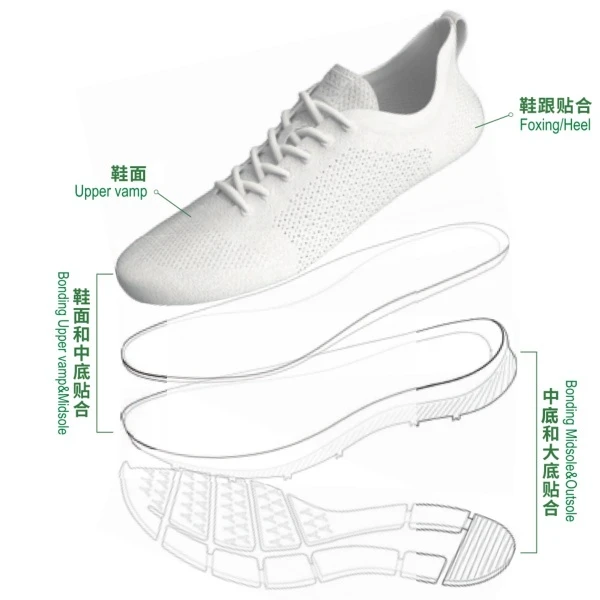
Footwear industry: Bonding of PU shoe soles, PU shoe upper leather, solving the problem of sole degumming and upper peeling.
Luggage & Leather Goods: PU leather luggage, bag surface printing, coating and laminating bonding.
Automotive Interior: Bonding and painting of PU car cushions, door panels, armrests and foam parts.
Electronic Accessories: Adhesion treatment of PU protective covers, casings and shock-absorbing foams.
Daily Industrial Products: Bonding and surface coating treatment of various hard and soft PU molded parts.
4. Standard Operation Process (Stable Mass Production Version)
In order to ensure the best adhesion effect, Production operations usually need to follow the steps below
Surface cleaning: Wipe the PU surface to remove dust, oil stains and floating impurities to keep the bonding surface clean.
Coat treatment agent: Evenly spray, wipe or dip the PU treatment agent on the target surface, with a thin and uniform coating (no liquid accumulation).
Drying treatment: Natural drying for 3-5 minutes, or low-temperature baking (50-60℃, 2-3 minutes) until the surface is completely dry and non-sticky.
Subsequent processing: Carry out gluing, laminating, painting and printing operations immediately after drying. After full curing, the bonding strength can reach the industrial standard.
Tips: Do not touch the treated surface with hands or pollute it before subsequent processing, so as not to affect the activation effect.
5. Final Summary
The poor adhesion of PU materials is not just a problem of glue or process, the primer is a key factor. Choosing a high-quality PU treatment agent is the simplest, most efficient and lowest-cost solution to solve PU bonding defects.
PU treatment agent features stable performance, simple operation and wide applicability, helping industrial manufacturers slove the trouble of PU product peeling and defective products, and effectively improve product quality and product competitiveness.