Product Overview
Surface primers are formulated as chemical pretreatment layers applied to specific substrates to maximize interfacial adhesion and long-term joint durability prior to structural adhesive bonding or sealing.
Core Purpose: Promotes chemical bonding on challenging substrates, prevents environmental delamination, and ensures mechanical joint integrity under thermal and physical stress.
Target Buyers: Process engineers, R&D formulators, automotive component manufacturers, metal fabricators, and structural glazing contractors.
Key Selection Drivers: Substrate compatibility, downstream adhesive chemistry, automated or manual application compatibility, flash-off/drying window, and verified aging resistance.
-
![White Rubber Primer]() White Rubber Primer
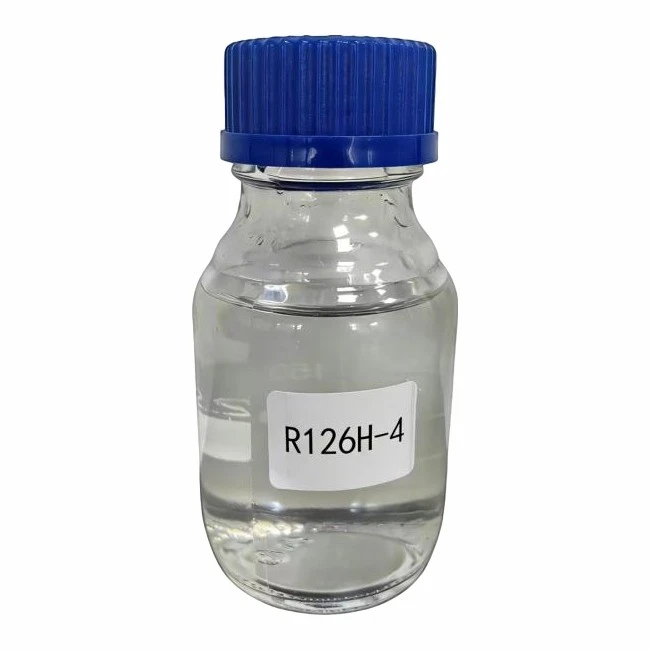
Rubber Primer R126H-4
In the production of high-end rubber products, light-colored rubber substrates such as white rubber and TPR face two challenges when it comes to bonding: they need to be... -
![Polyurethane Primer 203F]() Polyurethane Primer 203F
PU material primer 203F
Many footwear manufacturers struggle with unstable bonding results when working with low‑surface‑energy synthetic substrates. PU Material Primer 203F acts as a... -
![One-component EVA Primer]() One-component EVA Primer
EVA Primer EV78 In the production of footwear, sports equipment and foam‑related products, bonding common EVA substrates remains a tricky issue. Conventional pretreatment usually involves tedious...
-
![PU Material Primer]() PU Material Primer
PU material primer 206F
In footwear manufacturing, where precision is critical, whether advanced composite materials bond reliably largely depends on how well the surface preparation is done.... -
![Polyurethane Primer]() Polyurethane Primer
Polyurethane Primer 211
In today's highly competitive footwear industry, if you want to make durable, high-quality shoes, the first step is to get surface preparation right—it's the foundation... -
![Polyurethane Based Primer]() Polyurethane Based Primer
Polyurethane based primer 219K
You've probably run into this before: PU materials that have been printed, rubbed, or given a complex surface finish are hard to bond. Our polyurethane based... -
![Shoemaking Promoter]() Shoemaking Promoter
Shoemaking promoter 212F
When bonding high-end polymer materials, conventional surface treatment just isn't enough—if you want a strong bond, you need to prepare the substrate from the ground... -
![PU Cleaning Primer]() PU Cleaning Primer
PU cleaning primer 218F
To achieve strong adhesion with various high-end engineering materials, surface pretreatment is a critical step. PU cleaning primer 218F, as a next-generation... -
![PU Surface Primer]() PU Surface Primer
PU surface Primer 792B
PU surface primer 792B is a premium surface treatment product developed primarily for polymer materials such as PU, TPU, and various specialty PU sole compounds. It... -
![TPU Primer]() TPU Primer
E-TPU Primer 208F
Expanded thermoplastic polyurethane, commonly known in the industry as E‑TPU “popcorn foam,” is being used more and more widely in footwear manufacturing. However, the... -
![EVA Primers]() EVA Primers
MD EVA Primer EV80
In the production of footwear, sports equipment, and various foam products, bonding EVA materials has always been a cumbersome process. Traditional methods often require... -
![MD EVA Primer]() MD EVA Primer
MD EVA Primer EV80F
MD EVA Primer EV80F is a specialized primer designed for EVA materials used in footwear, sports equipment, and high-performance technical foam components. Compared with...


Key Selection Factors
Substrate Compatibility
Confirm suitability for the exact material grade, surface finish, or protective coating (e.g., anodized aluminum, E-coated steel, float glass, or engineering plastics).
01
Adhesive / Sealant Matching
Verify chemical compatibility with the downstream polyurethane, MS polymer, epoxy, or silicone system.
02
Application Method
Select a grade engineered for the intended production method, such as lint-free manual wiping or automated pneumatic robotic spraying.
03
Drying & Bonding Window
Review the required flash-off time, open time limits, and environmental operating conditions (temperature and relative humidity).
04
Technical Documentation
Evaluate the Technical Data Sheet (TDS), Safety Data Sheet (SDS), and batch test parameters before production scale-up.
05
Technical Specifications
|
Parameter |
Test Standard / Condition |
Typical Range |
|
Product Appearance |
Visual Inspection |
Clear to pale yellow transparent liquid |
|
Active Solids Content |
Gravimetric (105°C, 1 hr) |
4.0%–6.0% |
|
Viscosity |
Brookfield RVT (25°C) |
2.0–6.0 mPa·s |
|
Density |
ISO 2811 (20°C) |
0.85–0.95 g/cm³ |
|
Flash Point |
Closed Cup (ASTM D93) |
−5°C to 20°C (Solvent-dependent) |
|
Flash-Off / Drying Time |
23°C, 50% RH |
3–5 minutes |
|
Open Time |
Ambient Conditions |
Maximum permitted interval before bonding |
|
Shelf Life |
Unopened Container (5–25°C) |
12 Months |
|
Packaging Options |
Certified Containers |
1 L bottles, 5 L pails, 200 L drums |
Surface primers are utilized across multiple high-performance manufacturing sectors. Actual system compatibility must be verified prior to full-scale production.
Glass & Structural Glazing: Typically utilized for architectural float glass and ceramic-fritted automotive glass panels prior to direct-glazing or structural sealant application.
Metal Substrates: Applied on anodized aluminum alloys, stainless steel, cold-rolled steel (CRS), and hot-dip galvanized surfaces in component and transport fabrication.
Engineering Plastics: Utilized for specialized polymer substrates where surface energy enhancement is required before adhesive assembly.
Application Methods: Compatible with automated robotic pneumatic spraying, felt-pad roller applicators, and lint-free manual cloth wiping, depending on the chosen product grade.
Compatibility Verification: Before committing to production runs, provide your technical team with the substrate grade, surface pretreatment method, and downstream adhesive specification to conduct coupon testing and verify bonding performance.
Application & Handling Guidelines
Surface Preparation
Thoroughly degrease substrates using approved solvents (such as isopropyl alcohol) to eliminate machining oils, dust, and mold-release agents. Surfaces must be completely clean, dry, and free of residues.
Primer Application
Apply an ultra-thin, continuous, uniform film using the recommended application amount. Avoid heavy pooling, runs, or localized droplet accumulation, which can cause cohesive failure within the primer layer.
Drying and Subsequent Bonding
Allow complete solvent evaporation at ambient room temperature (20–25°C) for 3–5 minutes. Downstream bonding must be completed within the specified open time window. Drying times vary based on formulation, ambient temperature, humidity, and film thickness.
Storage and Safety Precautions
Classified as a flammable liquid. Store in tightly sealed original containers in a cool, dry, well-ventilated warehouse away from ignition sources. Consult the product SDS for detailed personal protective equipment (PPE) and emergency protocols.
Manufacturing & Quality Control
Production Integrity
Produced in closed-loop stainless-steel reaction systems equipped with inline sub-micron filtration (1 µm) to eliminate particulate contamination.
Batch Testing
Every production lot undergoes rigorous inspection for viscosity, density, and solids content against strict internal acceptance criteria.
Traceability & Retention
Containers feature unique barcode traceability linked to raw material records, supported by 24-month archived retention samples.
Documentation Support
Commercial shipments are accompanied by a batch-specific Certificate of Analysis (COA) and a GHS-compliant Safety Data Sheet (SDS).
Frequently Asked Questions

Request a Quote
To request technical data sheets (TDS), laboratory evaluation samples, or a formal commercial quotation, please provide your project details below:
Company Name & Destination Country:
Target Substrate & Surface Finish:
Downstream Adhesive or Sealant Type:
Estimated Annual Volume / Trial Order Quantity:
Packaging Preference: (e.g., 1 L bottle, 5 L pails, 200 L drums)
Target Application Method: (Manual wipe vs. automated robotic spray)
Guangdong Yrbest High Polymer Technology Co., Ltd. is one of the most professional primer manufacturers and suppliers in China, featured by quality products and good price. Please rest assured to buy bulk advanced primer from our factory. Contact us for quotation and free sample.