What Are Polyurethane Adhesives
Polyurethane adhesives are reactive structural bonding materials containing carbamate groups (-NHCOO‑) or isocyanate groups (-NCO). Capable of forming strong, long‑lasting bonds with multiple substrates, they do not merely join materials physically but integrate closely with substrate surfaces to build integral structural joints.
Thanks to high mechanical stress‑bearing capacity, polyurethane adhesives can in many cases replace traditional mechanical joining solutions such as welding and screws for structural assembly work.
Chemical Composition
Two core raw materials constitute polyurethane adhesives:
- Isocyanates
- Polyols
To satisfy diverse application requirements, auxiliary ingredients including fillers, tougheners, diluents, catalysts and coupling agents are commonly incorporated. These additives are formulated to modify and tailor targeted physical and chemical properties of final adhesive products.
Working Mechanism
The fundamental reaction takes place between isocyanate groups and active‑hydrogen‑containing substances. This chemical reaction generates polyurethane molecular structures, which endow cured polyurethane adhesives with combined high strength and good flexibility.
Key Advantages
- Broad hardness range, suitable for versatile working conditions
- High mechanical strength with excellent performance for bonding and structural support
- Superior wear resistance, comparable to wear‑resistant rubber
- Good oil resistance, on par with nitrile rubber and close to polysulfide rubber
- Ozone resistance delivering reliable weathering performance
- Vibration damping and radiation resistance, maintaining stability under heavy vibration and radiation exposure
Main Limitations
- Moderate high‑temperature tolerance: normal service temperature spans ‑40 °C to 120 °C; hydrothermal resistance is limited
- Vulnerable to strong solvents, strong acids and bases: alcohols, acids and ketone‑type solvents may trigger degradation under certain temperature conditions
- Moisture sensitivity: polyurethane curing agents readily absorb ambient moisture, which may cause foaming inside cured adhesive layers
One‑component & Two‑component Polyurethane Adhesives
One‑component Adhesives
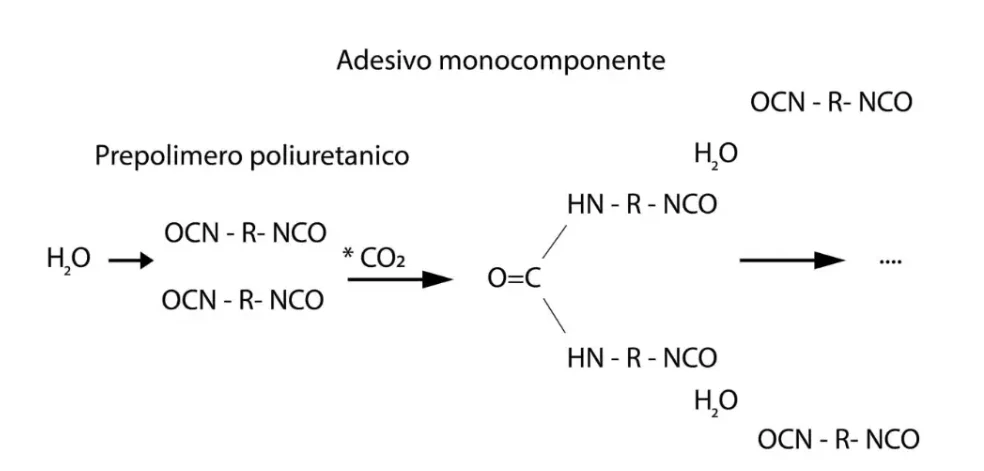
One‑component polyurethane adhesives are mainly formulated from NCO‑terminated polyurethane prepolymers blended with additives and solvents. After application, they react with moisture from substrates and surrounding air to form covalent bonds onto material surfaces.
Two‑component Adhesives
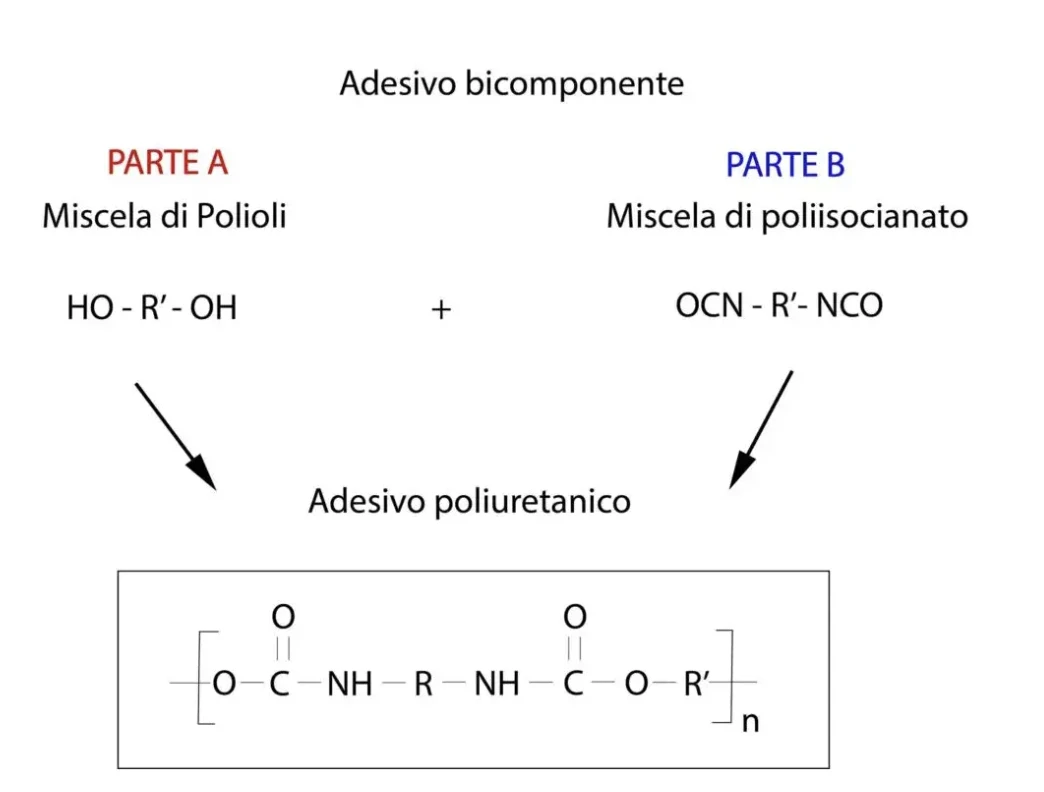
Two‑component systems consist of Part‑A polyol blends and Part‑B isocyanate hardener blends. Once mixed, polyols and isocyanates proceed via polyaddition reactions to build polyurethane polymer networks. Additional chemical modifiers can be introduced to fine‑tune physical and chemical characteristics of the final adhesive.
Major Application Fields
Automotive Industry: Structural body bonding and sealing operations.
Construction Industry: Bonding and sealing for various building materials.
Electrical & Electronics: Bonding and potting of precision electronic components to guarantee component stability and protection.
Conclusion
As versatile structural adhesives, polyurethane materials balance high strength, flexibility and multi‑substrate compatibility, supporting manufacturing across many heavy‑duty industries. Engineers should take their temperature tolerance, solvent stability and moisture sensitivity into full account when selecting grades for specific production conditions.