Current Market Status in China
Driven by the booming new‑energy‑vehicle sector, China's automotive PU adhesive market reached approximately RMB 4.2‑4.6 billion in 2025, and is projected to exceed RMB 5 billion in 2026.
There is a clear difference in consumption between conventional fuel vehicles and electric vehicles. A fuel‑powered passenger vehicle consumes roughly 3‑5 kg of PU adhesives, while a new‑energy electric vehicle uses 8‑12 kg. Most incremental demand comes from battery‑pack sealing, CTP/CTC integrated chassis structures and lightweight composite‑material bodywork.
From the demand‑structure perspective, new‑energy passenger vehicles account for around 52 % of total PU‑adhesive consumption, followed by traditional fuel passenger vehicles at 28 %, commercial vehicles at 14 %, and automotive after‑sales repair markets at 6 %.
In terms of market competition, international suppliers such as Henkel, Sika and BASF maintain dominant positions in high‑end OEM supporting business with mature product certification. Domestic Chinese PU‑adhesive manufacturers are expanding rapidly in commercial‑vehicle matching, component‑part supply and after‑sales maintenance segments. Several local players have successfully entered supply chains of domestic new‑energy‑vehicle brands, although high‑performance automotive structural adhesives still show gaps versus imported alternatives.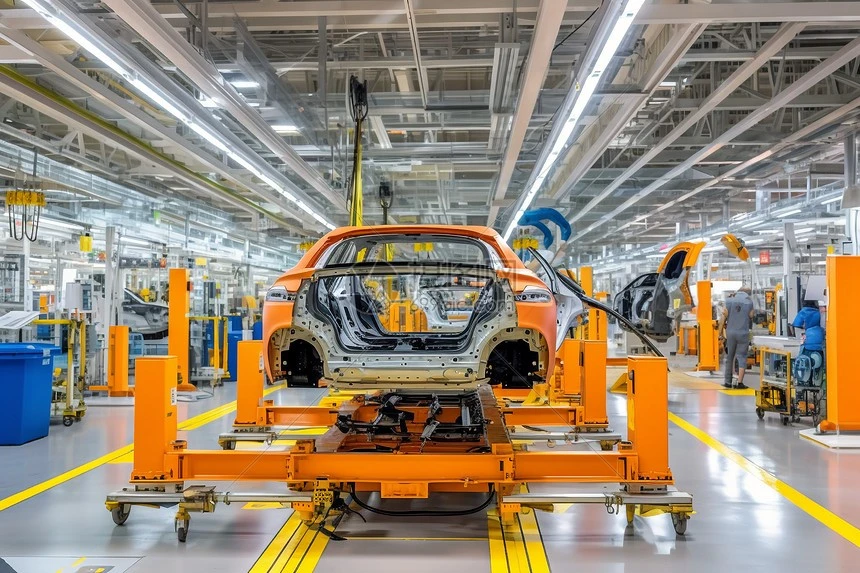
Key Industry Growth Drivers
First, rapid expansion of new‑energy automobiles fuels major material‑demand growth. As aluminium alloys, SMC composites and engineering plastics gradually replace steel, traditional welding processes can no longer satisfy assembly requirements. Bonding and sealing solutions based on PU adhesives are therefore seeing widely used. Battery‑pack sealing and integrated‑body manufacturing represent the largest‑growth application scenarios.
Secondly, stricter vehicle safety, crashworthiness, and NVH (noise-vibration-harshness) requirements are pushing car manufacturers to use more multifunctional polyurethane materials. In addition to joining parts, polyurethane adhesives can also provide sealing, shock absorption, and noise reduction.
Third, increasingly strict environmental regulations are driving product updates. Solvent-based adhesive products are facing more and more policy restrictions, so low-VOC and solvent-free polyurethane adhesives are gradually becoming the mainstream choice for automotive materials.
Existing Industry Challenges
Despite bright prospects, the sector still faces notable challenges. Core formulations and certain raw materials for high‑end automotive PU structural adhesives remain partially dependent on imports. Gaining OEM qualification is time‑consuming, with certification cycles often lasting 1‑3 years, creating high barriers for small‑and‑medium adhesive enterprises to enter vehicle‑manufacturer supply chains.
Intense price competition within the automobile industry creates cost pressure passed down to upstream material suppliers, triggering homogenised low‑price competition in part of the domestic market. In addition, automotive adhesives must meet strict standards for damp‑heat resistance, salt‑spray resistance and long‑term anti‑ageing, raising technical thresholds for formula development.

Market Forecast for 2025‑2030
The Chinese automotive‑PU‑adhesive market is expected to register a compound annual growth rate (CAGR) of 8.2 %‑10.5 % between 2025 and 2030. By 2030, overall market size is forecast to hit RMB 7.5‑8.5 billion.
High‑growth sub‑segments will focus on PU sealants for power‑battery systems, structural adhesives for lightweight composite‑material bodies, and repairable automotive‑grade PU adhesives. Main development trends include solvent‑free low‑VOC formulations, high‑toughness structural‑adhesive innovation, accelerated domestic‑substitution progress, and deeper integration between adhesive materials and automated dispensing & simulation technologies.
In terms of competition, international brands will continue to dominate high-end OEM projects, while domestic manufacturers will further expand their share in local vehicle manufacturers and the aftermarket service market. Future competition will focus on formulation capabilities, stable raw material supply chains, vehicle manufacturer certification resources, and customized development services.
Potential Industry Risks
Market volatility in automobile production and sales will directly influence adhesive‑material demand. Sharp price swings of upstream chemical raw materials such as MDI and polyols may squeeze manufacturers' profit margins. Updated environmental‑protection and automotive‑safety standards will also continuously raise R&D and production‑transformation costs for adhesive suppliers.
Closing Thoughts
Against the background of automotive electrification and lightweight transformation, polyurethane adhesives are assuming greater importance in vehicle‑body safety, battery‑system reliability and composite‑material assembly. While technical and supply‑chain challenges persist, ongoing domestic‑substitution progress will unlock huge market opportunities for Chinese PU‑adhesive enterprises from 2025 to 2030.