Water‑Based Adhesive Systems: Practical Industrial Selection & Application Guidelines
Water‑based adhesive systems have become a practical option for many industrial bonding production lines. They have flexible open‑time, cleaner handling and lower emissions, while also achieving satisfactory bonding performance on suitable substrates.
For procurement specialists and engineers, the real question is not whether water‑based adhesives are "good", but which application scenarios they fit, where their performance falls short, and what process parameters must be controlled to avoid production losses.
What Are Water‑Based Adhesives and Their Industrial Uses
Water‑based adhesives use water as the primary carrier for polymers, resins or dispersed particles. Bonding forms mainly as water evaporates,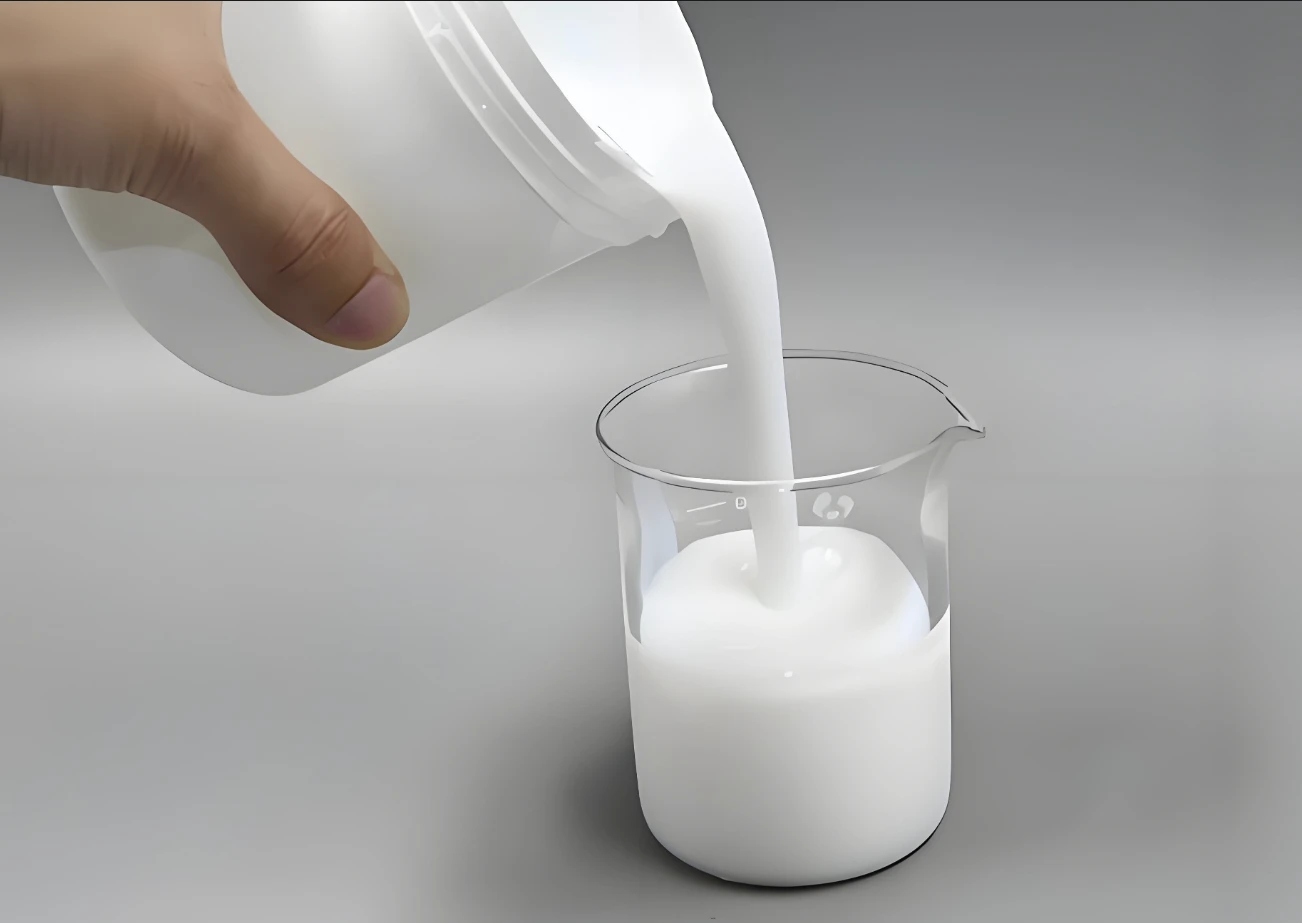 allowing adhesive components to coalesce into a continuous film or network.
In actual production, this means water‑based adhesives are generally easier to apply and simpler to clean up before drying. Compared with solvent‑borne adhesives, they help cut solvent emissions.
That said, they are not always the optimal solution. In industrial procurement,
it is critical to separate operational convenience from end‑use performance.
Water‑based adhesives perform excellently under these conditions:
- The production process allows sufficient drying time
- Substrates absorb or release moisture in a controllable manner
- The end‑use environment is not persistently humid or high‑temperature
Water‑based adhesives can be formulated for targeted viscosity, application methods and flexibility, yet they still carry inherent application limitations.
Common Chemical Families
Most industrial water‑based adhesive systems fall into several major categories.
- Acrylic dispersions: Widely used where high transparency, ageing resistance or weather resistance are required.
- Latex systems: Offer good tack and efficient film‑forming performance for packaging, paper‑making and certain assembly applications.
- Hybrid systems: Combine properties of multiple resins to strike a better balance among bonding strength, flexibility and processability.
When evaluating chemical product lines, buyers should raise a practical question: which properties are optimised, and which are compromised as a trade‑off.
- More flexible formulations may reduce stress cracking yet lower heat resistance.
- Faster‑curing systems can boost line speed while narrowing the processing window.
- High‑solids systems may ease drying loads but demand tighter coating‑thickness control.
Best‑Fit Applications for Water‑Based Adhesives
Water‑based adhesive systems tend to deliver the best performance on porous or moderately absorbent substrates, where assembly speed aligns with drying behaviour.
Typical use cases include paper & packaging, labels, bookbinding, furniture edge‑banding, textile assembly, foam lamination and light‑duty industrial assembly. In these scenarios, moisture can escape during assembly and substrates provide initial tack, enabling reliable adhesive‑film formation.
For many buyers, the appeal extends beyond environmental benefits. Water‑based formulations enable more uniform coating, lower odour and simpler process cleaning. In addition, when properly tuned for viscosity and solids content, they integrate directly into existing production lines equipped with roller coating, spray nozzles, slot‑die or bead‑coating processes.
Core Advantages of Water-Based Adhesives in Industrial Production
Good performance on porous and semi‑porous substrates
Effective open time for part positioning during assembly
Cleaner handling compared with many solvent‑borne systems
Formulation flexibility to tailor tack, viscosity and film texture
Well‑suited for manufacturing facilities with strict emission‑control policies
Best-Fit Application Scenarios for Water-Based Adhesives
Water‑based adhesive systems tend to deliver the best performance on porous or moderately absorbent substrates, where assembly speed aligns with drying behaviour.
Typical use cases include paper & packaging, labels, bookbinding, furniture edge‑banding, textile assembly, foam lamination and light‑duty industrial assembly. In these scenarios, moisture can escape during assembly and substrates provide initial tack, enabling reliable adhesive‑film formation.
For many buyers, the appeal extends beyond environmental benefits. Water‑based formulations enable more uniform coating, lower odour and simpler process cleaning. In addition, when properly tuned for viscosity and solids content, they integrate smoothly into existing production lines equipped with roller coating, spray nozzles, slot‑die or bead‑coating processes.
Ideal Application Fields & Compatibility Principles
Water-based adhesive systems show prominent adaptability in specific industrial bonding scenarios, especially for porous substrates and low-to-medium strength light assembly work. The following table summarizes mature application fields, core compatibility reasons and key process notes for reference by engineers and procurement teams:
|
Application Field |
Why Water-Based Adhesives Are Suitable |
Process Instructions |
|---|---|---|
|
Paper & Packaging |
Porous paper substrates facilitate fast moisture discharge and deliver rapid initial tack for quick fixation. |
The production line speed must be matched with the adhesive drying speed to avoid incomplete curing. |
|
Furniture & Wood Product Assembly |
Wood is a breathable substrate that tolerates moisture and accelerates natural water removal during the curing process. |
Consistent clamping pressure and uniform adhesive coverage are essential for stable bonding results. |
|
Labels & Graphics |
Water-based formulas support precise coating control and deliver a clean, residue-free appearance for finished products. |
Adhesive bonding strength must be balanced to meet specific release and peeling performance requirements. |
|
Textile & Fabric Lamination |
These adhesives feature excellent flexibility and large-area coating adaptability, fitting soft material lamination demands. |
Strictly control coating lines and film texture to ensure uniform fabric hand feel after lamination. |
|
Light-Duty Industrial Assembly |
They provide moderate and reliable bonding strength with simple, flexible application methods for lightweight assembly tasks. |
Long-term environmental exposure of finished products must be strictly controlled to avoid performance attenuation. |
Key Limitations & Technical Challenges of Water-Based Adhesives
The limitations of water-based adhesive systems mainly stem from uncontrollable process conditions, harsh application environments, or incompatible substrates that block effective moisture removal. Unlike solvent-borne adhesives, their curing efficiency highly depends on moisture volatilization, which leads to obvious performance constraints in specific industrial scenarios.
Non-porous substrates represent the most common challenge. Without water-absorbing substrates, moisture can only be removed through surface evaporation and slow diffusion, greatly extending the curing cycle. High-speed production lines will exacerbate this problem: if the adhesive fails to build up sufficient initial tack before the next assembly procedure, it will cause displacement, degumming and defective products.
Humid working environments are another critical restriction factor. Residual interfacial moisture or long-term exposure to humid conditions will gradually reduce bonding strength and damage long-term durability. Research from the National Institute of Standards and Technology (NIST) has verified that interfacial moisture continuously weakens adhesive bonding force over time. This indicates that moisture interference is not only a temporary production process issue, but also a fatal factor affecting product service life.
For this reason, professional matching evaluation is essential before selecting water-based adhesive systems. Manufacturers must confirm the actual service environment of finished products, including dry warehouse storage, humid electrical cabinet operation, frequent flushing scenarios, and outdoor exposure conditions, to avoid inappropriate adhesive selection and subsequent product failure risks.
Drying and Curing: Why Moisture Removal Dominates Bonding Strength
One of the most common misunderstandings about water-based adhesives is that they cure in the same way as reactive adhesives. In most industrial applications, the primary curing mechanism of water-based adhesive systems relies on physical drying and film formation, rather than chemical cross-linking that occurs independently of solvent or moisture loss.
This core difference determines that key bonding performances - including open time, drying speed, and final bond strength - are highly dependent on external process variables. Airflow volume, wet coating thickness, substrate porosity, ambient temperature, and relative humidity all directly control the entire curing process and final adhesion results.
Technical research on water-based latex film formation further proves that reliable bonding force is generated through particle accumulation, deformation, and coalescence during continuous moisture evaporation. In short, qualified curing requires not only complete water removal, but also the formation of a continuous, intact adhesive film at the bonding interface.
Any slowdown in the drying process caused by high ambient humidity, damp substrates, or insufficient ventilation will lead to delayed or incomplete film formation. This issue directly results in reduced production efficiency, unstable initial tack, and decreased long-term bond durability.
To standardize production and eliminate unstable bonding risks, production teams are recommended to define a complete process window for each adhesive formula. Key evaluation indicators include the valid open time for assembly, required drying interval before handling, necessary clamping or compression procedures, and whether the production line can accommodate low-speed drying processes without creating operational bottlenecks.
Conclusion
Water-based adhesive systems serve as an excellent bonding solution for modern industrial manufacturing, yet their reliable performance is strictly conditional. They deliver stable and cost-effective bonding results only when the substrates, service environment, and production processes fully support their drying-driven curing mechanism. These adhesive products are ideally suited for paper and packaging, wood furniture, label graphics, textile lamination, and light-duty assembly applications, especially for factories pursuing low emissions, clean operation, and standardized production.
Nevertheless, the applicability of water-based adhesives will be significantly compromised under unfavorable conditions. Poorly permeable non-porous joint surfaces, ultra-fast production line speeds that prevent adequate moisture evaporation, and long-term service environments with high humidity or high temperature will all lead to incomplete film formation, unstable bonding strength, and reduced product durability.