Introduction
Foamed EVA (Ethylene‑Vinyl Acetate copolymer) is the dominant midsole material widely adopted in modern footwear manufacturing, valued for balanced mechanical performance and competitive cost. However, its intrinsically low‑polar surface creates poor adhesion for polyurethane shoe adhesives. Surface pretreatment is indispensable to secure reliable bonding strength for finished shoes.
Traditional solvent‑borne EVA primers dominate the market, yet they bring VOC emission pollution, occupational health risks and fire hazards. With tightening global VOC regulatory requirements across footwear supply chains, water‑based UV‑curing EVA primers have emerged as a promising next‑generation solution for shoe factories. This article reviews mainstream EVA surface‑treatment technologies, analyzes real‑world production pain‑points, and illustrates the development direction for eco‑friendly EVA pretreatment chemicals.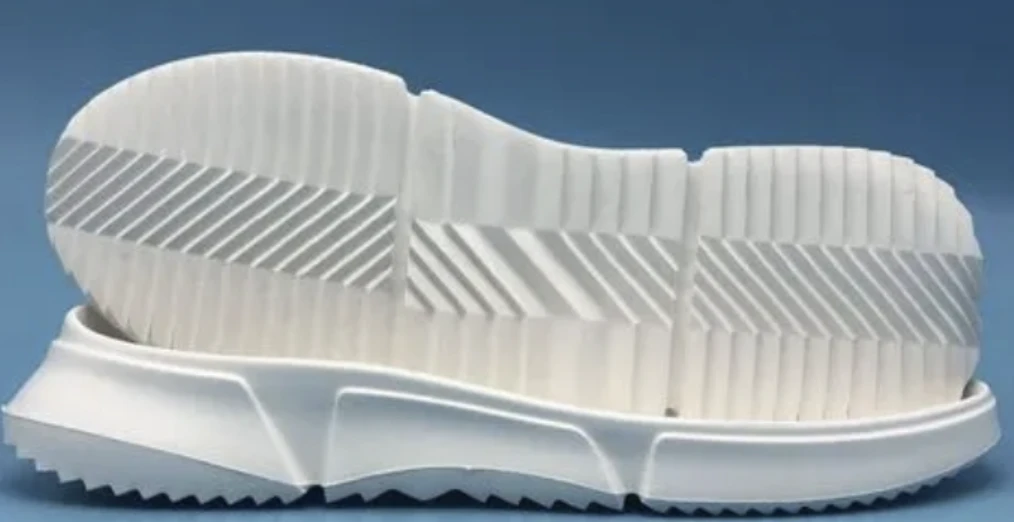
Why EVA Material Needs Surface Pretreatment
Most midsoles for sports footwear are manufactured from foamed EVA and its blends. Non‑polar ethylene segments within EVA molecular chains result in low surface polarity. Untreated EVA substrate cannot form stable bonding with water‑borne polyurethane shoe adhesives, failing to meet production‑grade peel‑strength requirements.
Over 80 % of existing commercial EVA surface primers belong to solvent‑based formulations. Large volumes of volatile organic compounds pollute factory air, harm operators' physical well‑being, and introduce fire & explosion risks.
Regulatory constraints on VOC emissions keep getting stricter. Many regions have rolled out special governance plans targeting adhesives, coatings and printing inks. Solvent‑intensive chemical projects are being restricted or prohibited. EVA surface primers, as supporting bonding materials, fall within the scope of such environmental compliance oversight. Hence, developing high‑performance water‑based EVA pretreatment agents has become an urgent industry demand.
Compared with conventional evaporation‑drying primers, UV‑irradiated pretreatment delivers superior treatment effects without mechanical roughening of EVA parts. Compact UV curing equipment fits inline mass‑production assembly lines well. Water‑borne UV‑curing primers represent a key technical trend for footwear EVA pretreatment.
Mainstream EVA Surface Pretreatment Technologies in Shoe Manufacturing
- Plasma Surface Treatment
Active plasma particles trigger physical‑chemical interactions on EVA surfaces, lifting surface polarity and surface energy so adhesives can anchor better.
Limitation: Mostly applicable for flat shoe‑material surfaces; widely used prior to ink printing, less ideal for irregular curved bonding interfaces in shoe assembly.
- Vulcanization Surface Treatment
Surface vulcanization modifies EVA surface activity to improve glue adhesion.
- Grafting Surface Treatment
Polar‑group‑carrying active monomers are grafted onto EVA substrate surfaces to boost surface polarity and final bonding strength.
- UV‑Irradiation Surface Treatment
UV exposure induces chemical transformation on EVA surfaces, enhancing wettability and bonding performance. Proper UV wavelength and exposure duration are critical to achieve satisfactory modification results.
- Mechanochemical Surface Treatment
Mechanical sanding generates free radicals on abraded EVA surfaces, forming covalent bonds with polyurethane adhesives. Rough topography also enlarges bonding contact area. This is the common "roughening‑before‑bonding" process adopted in many shoe workshops.
- Primer Coating Pretreatment (Base‑coat Method)
An ultra‑thin coating (2‑3 μm thickness) is applied to alter EVA surface properties. The vast majority of commercial base‑coat primers available today remain solvent‑based products.
Practical Application Status in Different‑tier Shoe Factories
Different‑scale footwear manufacturers select pretreatment workflows according to product positioning and equipment investment:
Small‑and‑medium shoe factories for low‑density EVA: solvent‑based evaporative‑drying EVA primers.
Mid‑size factories for medium‑&‑high‑density EVA: mechanical roughening followed by solvent‑borne evaporative‑drying primers.
Brand‑level factories: cleaning / roughening process + solvent‑based UV‑curing pretreatment primers.
Premium top‑tier shoe manufacturers: substrate cleaning then water‑based UV‑irradiation primers.
Even current commercial water‑based UV primers still contain above 30 % co‑solvent, leaving further room for full low‑VOC upgrade. Plasma treatment is limited to flat surfaces and seldom serves for bonding pretreatment of contoured shoe components.
Conclusion
Mechanical roughening and solvent‑borne primers still occupy the mainstream of EVA pretreatment in shoe production, yet they come with high‑VOC drawbacks or extra‑process labour costs. Water‑based UV‑curing EVA primers avoid heavy solvent usage, skip roughening steps and adapt to automated assembly lines, perfectly matching global low‑VOC transformation trends for the footwear industry. Reducing residual co‑solvent while maintaining stable bonding performance will be the core R&D focus for next‑generation eco‑friendly EVA pretreatment chemicals.