Product Overview
Single-component, moisture-curing polyurethane primer engineered to optimize interfacial adhesion between porous and non-porous substrates and subsequent protective coatings, waterproofing membranes, or joint sealants. Designed for industrial contractors, chemical distributors, and OEM assembly manufacturers requiring long-term structural integrity under severe mechanical and environmental stress.
-
![Polyurethane Primer 203F]() Polyurethane Primer 203F
PU material primer 203F
Many footwear manufacturers struggle with unstable bonding results when working with low‑surface‑energy synthetic substrates. PU Material Primer 203F acts as a... -
![PU Material Primer]() PU Material Primer
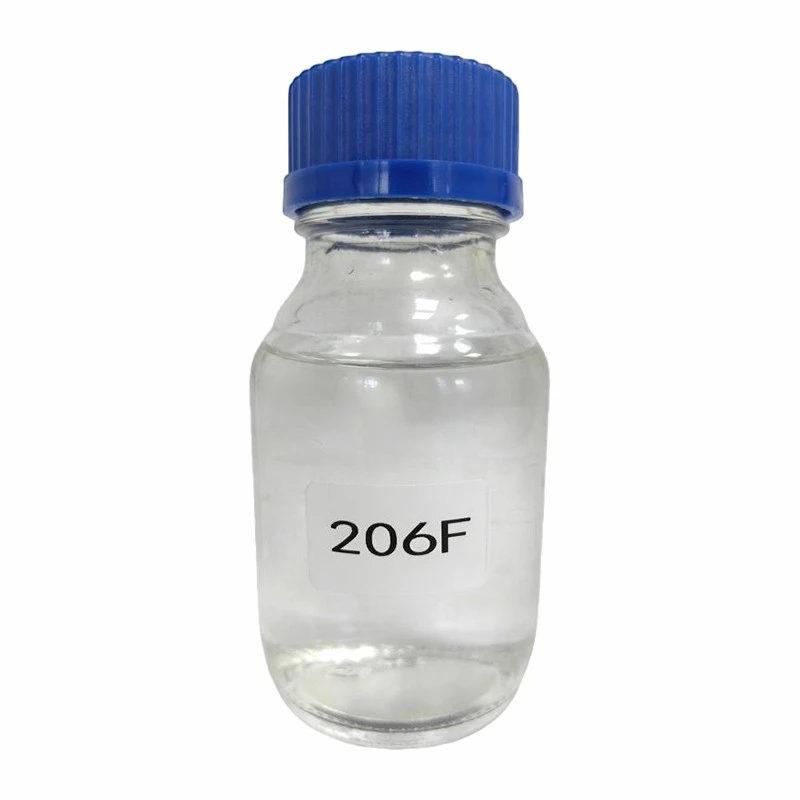
PU material primer 206F
In footwear manufacturing, where precision is critical, whether advanced composite materials bond reliably largely depends on how well the surface preparation is done.... -
![Polyurethane Primer]() Polyurethane Primer
Polyurethane Primer 211
In today's highly competitive footwear industry, if you want to make durable, high-quality shoes, the first step is to get surface preparation right—it's the foundation... -
![Polyurethane Based Primer]() Polyurethane Based Primer
Polyurethane based primer 219K
You've probably run into this before: PU materials that have been printed, rubbed, or given a complex surface finish are hard to bond. Our polyurethane based... -
![Shoemaking Promoter]() Shoemaking Promoter
Shoemaking promoter 212F
When bonding high-end polymer materials, conventional surface treatment just isn't enough—if you want a strong bond, you need to prepare the substrate from the ground... -
![PU Cleaning Primer]() PU Cleaning Primer
PU cleaning primer 218F
To achieve strong adhesion with various high-end engineering materials, surface pretreatment is a critical step. PU cleaning primer 218F, as a next-generation... -
![PU Surface Primer]() PU Surface Primer
PU surface Primer 792B
PU surface primer 792B is a premium surface treatment product developed primarily for polymer materials such as PU, TPU, and various specialty PU sole compounds. It... -
![TPU Primer]() TPU Primer
E-TPU Primer 208F
Expanded thermoplastic polyurethane, commonly known in the industry as E‑TPU “popcorn foam,” is being used more and more widely in footwear manufacturing. However, the...


Applications & Compatible Materials
Engineered for multi-substrate preparation across heavy-duty industrial and construction sectors.
Substrates & Bonding Objects
Porous Substrates: Aged and green concrete, cementitious screeds, structural mortar, and exterior timber.
Non-Porous / Metallic Substrates: Grit-blasted carbon steel, galvanized iron, and anodized aluminum.
Plastics / Composites: FRP (Fiber-Reinforced Plastics), rigid PVC, and specific structural ABS components.
Process Scenarios
Substrate sealing prior to polyurethane and MS polymer joint sealant installation in
civil engineering.
Concrete deck priming before liquid-applied polyurethane waterproofing and traffic deck coating systems.
Surface pre-treatment for automotive glass direct-glazing and industrial sandwich panel fabrication.
Technical Specifications
|
Technical Parameter |
Test Method / Standard |
Typical Value / Range |
|
Chemical Base |
— |
Polyurethane Prepolymer |
|
Appearance / Color |
Visual |
Clear / Pale Amber Liquid |
|
Solid Content (%) |
ISO 3251 |
35% ± 2% |
|
Viscosity (mPa·s at 25°C) |
ISO 2555 (Brookfield, Spindle 2/20rpm) |
80 - 150 |
|
Density (g/cm³ at 20°C) |
ISO 2811 |
0.95 - 0.98 |
|
Touch Dry Time (min at 23°C, 50% RH) |
ASTM D5895 |
15 - 30 |
|
Recoat Window (Hours) |
Internal Test Method |
Min. 1 hour / Max. 24 hours |
|
Application Temperature (°C) |
— |
+5°C to +35°C |
|
Shelf Life (Months) |
Unopened Container at 20°C |
12 Months |
Application & Handling Guidelines
Surface Preparation: Substrates must be structurally sound, dry, and free from oil, grease, dust, laitance, and curing compounds. Concrete moisture content must not exceed 4% (measured via capacitive meter). Steel surfaces must achieve an ISO 8501-1 Sa 2.5 blast cleaning grade.
Application Methods: Applied via solvent-resistant brush, short-nap mohair roller, or airless spray equipment.
Mixing Requirements: Single-component system. Stir thoroughly using a low-speed mechanical mixer (300–400 rpm) for 2 minutes prior to application to ensure absolute homogeneity.
Curing Conditions: Cures via reaction with atmospheric moisture. Optimal curing environment requires temperature between +15°C and +25°C with relative humidity between 50% and 70%.
Safety & Storage: Store in tightly sealed original containers in a cool, dry, well-ventilated area away from direct sunlight and ignition sources. Flammable liquid. Wear chemical-resistant gloves, safety goggles, and organic vapor respirators during handling.
Manufacturing & Quality Control
Production Process
Manufactured in closed-loop, nitrogen-purged stainless steel reactors under strict anhydrous conditions to prevent premature moisture-curing reactions.
Batch Testing & Inspection
Every production batch undergoes rigorous laboratory testing for viscosity, solid content, density, and open time before release. Retained samples are archived for 12 months for full traceability.
Batch Management
Full lot traceability enabled via unique barcoded batch numbers marked on every container, linking directly back to raw material Certificates of Analysis.
Documentation Provided
Technical Data Sheet, Safety Data Sheet, and batch-specific Certificate of Analysis per shipment.
Product Selection & Technical Support
To determine the exact PU Primer grade required for your manufacturing line or construction project, please provide the following technical parameters:
Substrate Material: Exact chemical composition or grade of the bonding surfaces (e.g., concrete mix strength, aluminum alloy type, plastic grade).
Operational Environment: Service temperature range, exposure to standing water, chemical immersion, or outdoor UV radiation.
Subsequent Coating/Sealant: Chemical family of the overlying layer (e.g., polyurethane, silicone, epoxy, MS polymer).
Application Method & Volume: Manual vs. automated dispensing, estimated monthly or annual consumption, and packaging preferences (1L tins, 5L cans, 20L pails, or 200L drums).
Contact our application engineering team to request complimentary laboratory sample test kits for peel-adhesion and shear-strength verification.
Frequently Asked Questions

Request a Quote
Submit your project specifications and volume requirements to receive a formal quotation, technical data package, or sample test kit.
Required Information: Substrate type, application method, estimated annual volume, packaging specification, and destination port.
Response Time: Technical and commercial inquiries are processed within 24 business hours.
Guangdong Yrbest High Polymer Technology Co., Ltd. is one of the most professional pu primer manufacturers and suppliers in China, featured by quality products and good price. Please rest assured to buy bulk advanced pu primer from our factory. Contact us for quotation and free sample.
different PU Primer, E TPU primers, Odorless shoe primer